In 1987, I spent six months as an engineering intern in Germany with printing machine companies and saw a picture of a home-made recumbent in a local paper. That picture made me resolve to build one myself and started a fascination with recumbents and all sorts of Human Powered Vehicles. It wasn’t till I got back to Australia that I made a rideable recumbent and it took until 1997 for me to make a rear wheel drive machine ridden in Melbourne’s 200k Round the Bay in a Day. Since that time I've been steadily improving the bikes. (Following pics from my Master's Degree Thesis, it can be downloaded here.
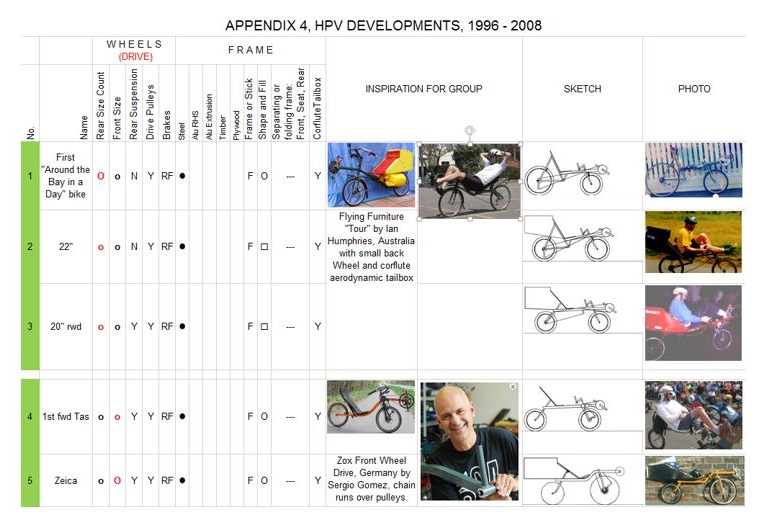
I started with rear wheel drive bikes, progresses to front wheel drive bikes with pulleys, and then to front wheel drive bikes with pulleys.

The final drive configuration I've used is direct drive front wheel drive, similar to the Bevo Bike.

Finally, I turned my attention from bikes to leaning trikes. Through OzHpv, I'd seen and ridden Paul Sims and Pete Heal's leaning trikes, and when Vi Vuong's "Ilean" system came along I had a go at adapting that. This was successful, and I made simple leaning trikes. Later, I went back to bikes, realising a bike design very similar to the leaning trike could be lighter and faster, though slightly more complicated.
The ultimate output from all this work has been not only the bikes and trikes I ride, but internet plans for them.
All of my deigns on Thingiverse
Lightweight / Aero Rear fork for bike version of Aluminium frame leaning trike.
Lightweight / Aero corflute / timber tailbox for Aluminium Bike or trike
What’s in a name? I decided to call my bikes (trikes / leaning trikes / whatever) “Freds”. Oh, but why? This quote comes from
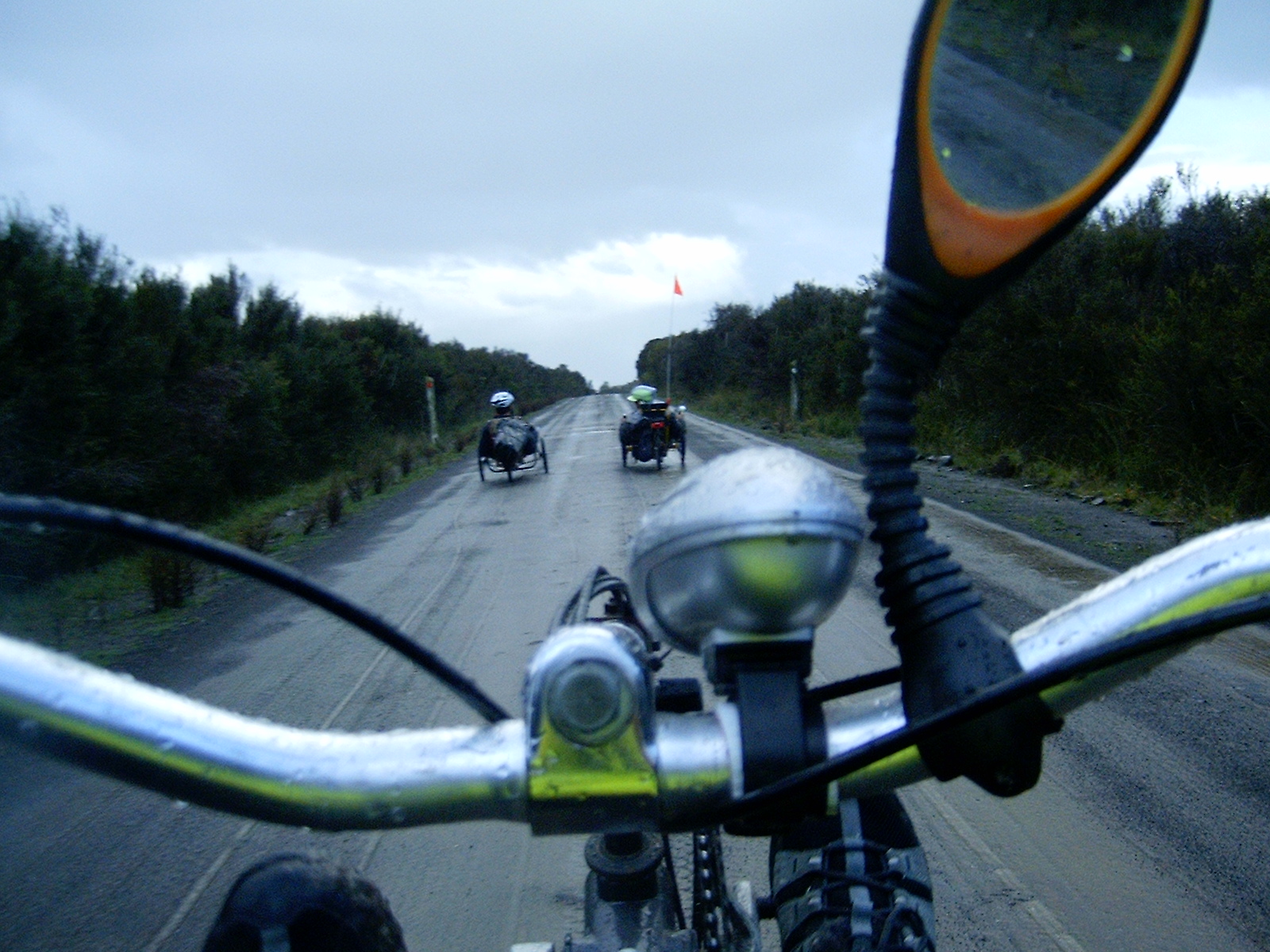
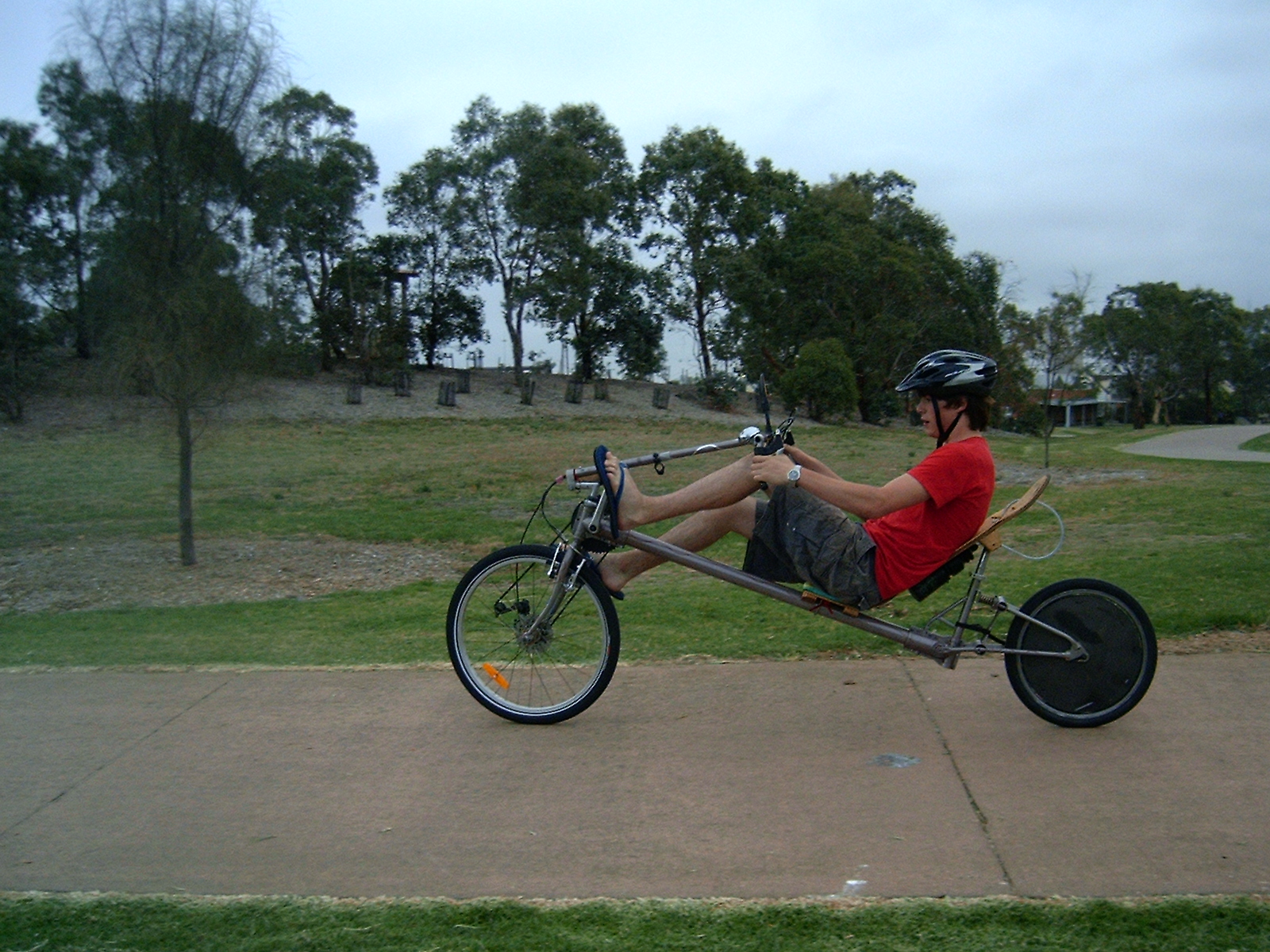
Jun Nogami's blog, Biking in a Big City where he mentions and links to the cycling term Fred . Now I have never used the cycling term Fred but have felt such it should exist. I have a homemade daggy-looking bike helmet with built in rear view mirror, so completely independent of the bikes I ride I can be identified as some sort of "other cyclist" or "Fred". Here is the third definition of Fred from the Bis Key Chronicles Blog:
"a Fred is a cyclist who has a ton of cycling gear, especially of the utilitarian “uncool” kind, like mirrors, powerful lights, fenders, bells/horns, heavy leather seats, racks, reflective gear, bags, baskets, etc. The gear and bike may be put together by kludgey homemade solutions, like duct-taped flashlights to the handlebar. This type of Fred is a bike geek who likes/needs lots of gear (even if it is modified stuff not intended for bikes) that a racer would never use, no matter what roadie cyclists or others think. Sacrificing some, or ignoring completely, concerns of speed or traditional roadie/sport cyclist style, these type of Freds are more concerned with practical concerns like comfort, safety, versatility, maintenance, being able to quickly transition to time and culture on/off the bicycle, etc. Freds of this type can be well aware of their fredness, once they are aware of the concept, and often embrace it wholeheartedly."
Regards
Stephen Nurse
steve(the at symbol)modularbikes.com.au
Phone Australia (03) 94818290 Fax (03) 9489 6669
10 Abbott Grove, Clifton Hill, Vic 3068, Australia